Merry Bright: Elevating Embroidery Projects with Texture and Versatility
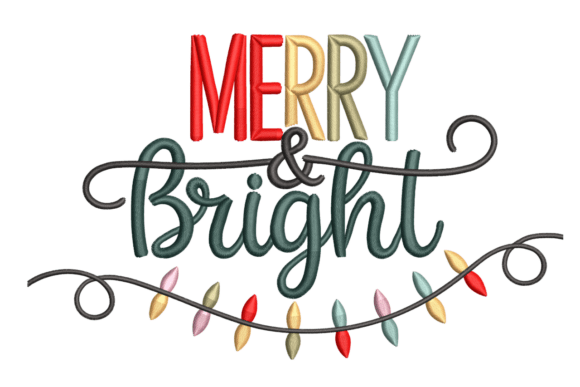
In the evolving landscape of machine embroidery, designers and hobbyists alike are constantly seeking patterns that transcend basic stitching. The Merry Bright design emerges as a compelling option for those looking to inject personality and tactile depth into their work. Unlike standard flat motifs, this decorative piece focuses on adding beauty and texture, creating a unique handcrafted feel that resonates with modern aesthetic trends. Whether applied to home décor or fashion accessories, understanding the nuances of this design can help crafters make informed decisions about their next project.
Understanding the Distinct Appeal of Merry Bright
At its core, Merry Bright is not merely a visual pattern; it is a textural experience. The design leverages specific stitch types—such as satin stitches, fill patterns, and potentially raised techniques—to create dimensionality. This distinction is crucial for users who want their creations to stand out in a saturated market of digital designs. The "handcrafted feel" mentioned in its description is achieved through careful digitizing that mimics the irregularities and warmth of manual needlework, even when produced by an automated machine.
For adults aged 20 to 50 who are often balancing professional lives with creative hobbies, the appeal lies in efficiency without sacrificing quality. Merry Bright offers a shortcut to high-end aesthetics. Instead of spending hours hand-embellishing a garment, users can achieve a similar artisanal look through precise machine execution. This makes it particularly attractive for small business owners selling custom goods, as well as individuals creating personalized gifts that need to feel special and thoughtful.
Comparing Textured Designs with Standard Alternatives
When evaluating Merry Bright against other embroidery resources, it is helpful to categorize options into three main groups: flat digital motifs, complex multi-layered designs, and textured specialty patterns like this one.
- Flat Digital Motifs: These are the most common and often the least expensive. They rely solely on color changes and basic shapes. While efficient, they can look mass-produced and lack the tactile engagement that modern consumers increasingly value.
- Complex Multi-Layered Designs: These offer visual depth through overlapping elements but may require extensive trimming and jump stitch management. They can be time-consuming and prone to errors if the machine tension is not perfectly calibrated.
- Textured Specialty Patterns (Merry Bright): This category strikes a balance. It provides visual interest through stitch density and type rather than just layering. The result is a design that feels substantial and luxurious without necessarily requiring the extreme technical overhead of ultra-complex layered art.
The tradeoff with textured designs like Merry Bright is often fabric compatibility. While flat motifs work on almost any material, textured designs require stable fabrics to support the added weight and density of the stitches. Users must consider whether their chosen substrate—be it denim, canvas, or heavy cotton—can handle the structural demands of the design without puckering.
Best-Fit Scenarios for Home and Fashion Applications
The versatility of Merry Bright allows it to bridge the gap between functional home items and wearable art. However, its effectiveness varies depending on the application.
Home Décor Projects
In home settings, texture adds warmth and coziness. Merry Bright excels when applied to items that are touched frequently, such as throw pillows, table runners, or wall hangings. The tactile nature of the design invites interaction, enhancing the sensory experience of the space. For example, using this design on a linen cushion cover creates a contrast between the smooth fabric and the raised embroidery, adding a layer of sophistication that plain prints cannot achieve.
Fashion and Accessories
In fashion, the design serves as a focal point. It is ideal for jackets, bags, and hats where durability and visual impact are paramount. The "unique handcrafted feel" aligns well with the slow fashion movement, where consumers appreciate individuality and craftsmanship. However, for delicate garments like silk blouses or lightweight summer dresses, Merry Bright might be too heavy. In these cases, a lighter, less dense alternative would be more appropriate to maintain the drape and comfort of the fabric.
Evaluating File Formats and Machine Compatibility
A critical factor in choosing any digital embroidery resource is technical compatibility. Merry Bright comes with multiple embroidery file formats, which is a significant advantage for users with diverse machine ecosystems. Common formats include PES, DST, JEF, and EXP, among others. This multi-format approach ensures that the design can be used with major brands such as Brother, Janome, Bernina, and Husqvarna Viking.
However, having multiple formats does not guarantee a perfect outcome every time. Users should be aware that different machines interpret stitch data slightly differently. A design that looks crisp on a high-end commercial machine might appear slightly less defined on an older entry-level model. Therefore, it is advisable to always run a test stitch-out on a scrap piece of the actual fabric before committing to the final project. This step helps identify any potential issues with thread tension or stitch density specific to your machine setup.
Decision Factors: When to Choose Merry Bright
Deciding whether Merry Bright is the right choice involves weighing several practical considerations. Here is a framework to help guide that decision:
- Project Goal: If the goal is to create a statement piece with tactile appeal, this design is a strong candidate. If the goal is quick, subtle branding or minimal decoration, a simpler flat motif might be more suitable.
- Fabric Type: Ensure the fabric is sturdy enough to support textured stitching. Medium to heavy-weight natural fibers are ideal. Avoid stretchy knits unless properly stabilized.
- Skill Level: While machine embroidery automates the process, textured designs require good stabilization techniques. Beginners should be prepared to invest time in learning proper hooping and stabilizer selection to avoid puckering.
- Time Constraints: Textured designs often have higher stitch counts, meaning longer run times. If speed is the primary concern, evaluate the stitch count of Merry Bright against faster alternatives.
Potential Limitations and Alternatives
No design is universally perfect. One limitation of Merry Bright is its potential complexity in terms of thread usage. Textured designs often require frequent color changes or specific thread types (such as matte vs. rayon) to highlight the dimensionality. This can increase material costs and production time. Additionally, if the design includes very fine details, it may not translate well at smaller sizes. Scaling down too much can cause stitches to merge, losing the intended texture.
For users who find Merry Bright too bold or complex, alternatives might include:
- Minimalist Line Art: Offers a clean, modern look with lower stitch counts and less fabric stress.
- Appliqué Designs: Uses fabric pieces to create shape and color, reducing stitch density while still adding texture through fabric layers.
- Monogram Fonts with Decorative Elements: Provides personalization with a touch of elegance, often easier to integrate into various projects.
Final Thoughts on Integrating Merry Bright
Merry Bright represents a thoughtful intersection of traditional craftsmanship and modern technology. It offers a viable path for creators to add depth and character to their work without needing advanced hand-embroidery skills. By understanding its strengths in texture and versatility, as well as its requirements for fabric stability and machine compatibility, users can effectively determine if it fits their specific creative needs. Whether enhancing a home interior or personalizing a fashion item, this design serves as a valuable tool in the embroiderer’s repertoire, provided it is matched with the right materials and expectations.