Understanding the Tribal Fish Tattoo Embroidery Design: A Guide to Style, Application, and Alternatives
The intersection of traditional body art aesthetics and modern textile application has given rise to a unique visual category: the Tribal Fish Tattoo Embroidery Design. This specific style merges the bold, high-contrast linework characteristic of Polynesian and Maori tattoo traditions with the tactile depth of high-quality embroidery. For designers, apparel brands, and individual enthusiasts, understanding the nuances of this design is essential for making informed decisions about its use in fashion, accessories, or decorative art.
Unlike standard printed graphics, this design relies on the physical texture of thread to mimic the solid blackwork of a tattoo. The result is a powerful and dynamic illustration where flowing, sharp lines and complex patterns evoke ancient cultural motifs while serving a contemporary functional purpose. This article explores what defines this aesthetic, how it compares to other design methods, and when it represents the optimal choice for your project.
Defining the Aesthetic: Bold Lines and Cultural Resonance
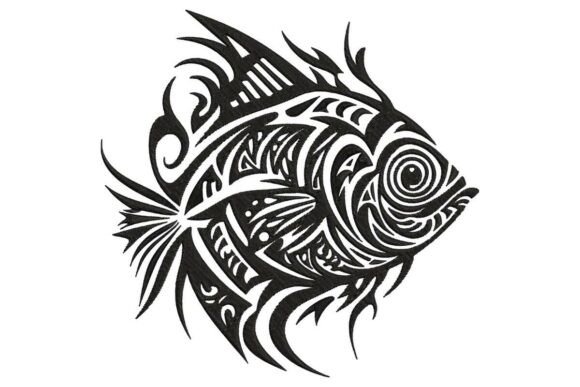
At its core, the Tribal Fish Tattoo Embroidery Design is defined by its abstraction and intensity. The fish form is not rendered through realistic shading or color gradients but is constructed entirely from abstract shapes. From the eye to the fins and tail, every element is created using powerful, interlocking geometric forms. These shapes often feature spearheads, crescents, and intricate lattice work, directly referencing the visual language of Pacific Islander cultures.
The "tattoo" aspect of the design dictates a monochromatic or limited-color palette, typically dominated by deep blacks. In embroidery, achieving this look requires dense stitching techniques such as satin stitch or fill stitch to create a solid, opaque appearance that mimics ink on skin. The texture is crucial; a high-quality execution will have a slight sheen and raised surface that catches light differently than flat ink, adding a layer of sophistication and durability to the piece.
Comparing Embroidery to Print and Patch Applications
When evaluating design options for apparel or accessories, it is important to compare embroidery against other common production methods. Each approach offers distinct tradeoffs in terms of cost, durability, and visual impact.
- Screen Printing: This is the most common alternative for applying graphic designs to fabric. While screen printing can reproduce the sharp lines of a tribal fish design accurately, it lacks the tactile dimension of embroidery. Printed designs sit flat on the fabric and may crack or fade over time with repeated washing. Embroidery, by contrast, is woven into the garment, offering superior longevity and a premium feel.
- Direct-to-Garment (DTG) Printing: DTG allows for highly detailed, multi-colored images. However, the tribal fish style relies on bold, solid shapes rather than photographic detail. Using DTG for this specific aesthetic can sometimes result in a loss of the "boldness" that defines tribal art, as the ink can soak into the fabric fibers. Embroidery maintains the crisp edges and visual weight required for this style.
- Woven Patches: Similar to embroidery, woven patches offer durability. However, woven labels often have a flatter, smoother texture and may struggle to replicate the dense, heavy blackwork look of a tattoo style. Embroidered patches allow for greater height and texture variation, making the design pop more effectively against the background fabric.
Choosing the Tribal Fish Tattoo Embroidery Design is often a decision to prioritize perceived value and durability over lower production costs. While embroidery is generally more expensive per unit than printing, the end product is viewed as higher quality by consumers.
Best-Fit Situations and Practical Applications
This design style is not universally suitable for every product. Its bold nature and specific aesthetic requirements make it ideal for certain applications while potentially overwhelming others. Understanding these fit factors helps in allocating resources effectively.
Apparel and Streetwear
The most natural home for this design is in streetwear and casual apparel. Hoodies, denim jackets, and heavy cotton t-shirts provide the structural support needed for dense embroidery. The weight of the thread complements the heavy fabric, creating a cohesive look. For example, placing a large tribal fish design on the back of a bomber jacket leverages the canvas size to showcase the intricate patterns without compromising the garment's drape.
Accessories and Gear
Bags, backpacks, and hats are excellent candidates for this design. The durability of embroidery withstands the friction and wear associated with daily accessory use. A tribal fish motif on a canvas tote bag or a leather patch on a backpack adds a rugged, adventurous element that aligns with the symbolism of the fish—often representing abundance, strength, and navigation.
Decorative Art and Home Goods
Beyond wearable items, this design works well as a standalone decorative piece. Embroidered wall hangings or pillow covers featuring the tribal fish can serve as bold focal points in interior design. The texture adds warmth to modern, minimalist spaces, providing a counterpoint to smooth surfaces like glass or metal.
Limitations and Design Considerations
While the Tribal Fish Tattoo Embroidery Design offers significant aesthetic benefits, there are technical limitations to consider. The primary constraint is resolution. Embroidery machines operate with threads, not pixels. Extremely fine details or very small text within the tribal patterns may become lost or blurred if the design is scaled down too much. To maintain clarity, the design must be simplified appropriately for the target size.
Additionally, the density of the stitching required to achieve the "blackwork" tattoo look can affect the flexibility of the base fabric. If applied to a lightweight or stretchy material, the embroidered area may pucker or cause the garment to hang unevenly. It is crucial to use stabilizers during production and to select fabrics with enough weight to support the design.
Color limitations also play a role. While multi-color embroidery is possible, the essence of the tribal tattoo style is its stark contrast. Introducing too many colors can dilute the powerful, abstract impact of the original concept. Sticking to one or two colors, typically black and a neutral background, ensures the design remains true to its roots.
Making the Right Choice for Your Project
Deciding whether to proceed with a Tribal Fish Tattoo Embroidery Design depends on your specific goals. If you are aiming for a premium, long-lasting product that conveys strength and cultural appreciation through bold visuals, this is an excellent choice. It stands out in a market saturated with flat, printed graphics and offers a tactile experience that engages the user.
However, if your project requires rapid prototyping, low minimum order quantities, or intricate photographic detail, other methods like DTG printing might be more appropriate. Similarly, if the budget is strictly constrained and the item is intended for short-term use, the higher upfront cost of digitizing and producing embroidered designs may not yield the desired return on investment.
Ultimately, the success of this design lies in the balance between artistic integrity and technical execution. Working with experienced embroiderers who understand how to translate sharp, abstract lines into stitch paths is vital. When done correctly, the Tribal Fish Tattoo Embroidery Design is more than just a pattern; it is a statement piece that bridges traditional artistry with modern craftsmanship, offering a distinctive option for those looking to elevate their visual identity.