Alphabet Roads Tracing: Playful Writing
Early literacy development often feels like a race against time, but for young learners, the journey should be as engaging as the destination. Traditional worksheets can quickly become monotonous, leading to disengagement before a child has fully grasped the mechanics of letter formation. This is where Alphabet Roads Tracing transforms the learning landscape. By reimagining letters and numbers as drivable pathways, we tap into a child’s natural affinity for play, turning fine motor practice into an immersive adventure.
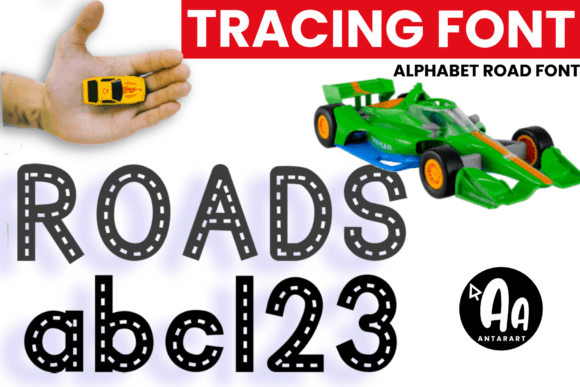
This approach is not merely about aesthetics; it is grounded in developmental psychology. When children perceive a task as play, their resistance drops, and their focus sharpens. The concept is simple yet profound: each character on the page is designed with dotted “road” lines, inviting students to trace uppercase letters, lowercase letters, and numbers using tools they love, such as toy cars, markers, or even their own fingers. For educators, parents, and therapists, this printable set offers a versatile, low-prep solution that bridges the gap between structured learning and free-form creativity.
Rethinking Fine Motor Skill Development
Fine motor control is the foundation of handwriting, yet it requires repetitive practice that can feel tedious to a four-year-old. Alphabet Roads Tracing addresses this challenge by integrating multi-sensory engagement. When a child pushes a small toy car along the dotted lines of the letter "S," they are not just playing; they are internalizing the curvature and directionality of the shape. This kinesthetic experience builds muscle memory more effectively than passive observation or rigid pencil drills alone.
The versatility of these mats allows for differentiated instruction. In a classroom setting, you might have one group using dry-erase markers on laminated pages to practice precision, while another group uses finger tracing to build initial familiarity. This adaptability makes the resource invaluable for diverse learning environments, from bustling kindergarten centers to quiet homeschool corners. The visual boldness of the road maps ensures that the target letter remains the focal point, reducing cognitive load and helping children concentrate on formation rather than deciphering complex instructions.
Creative Applications for Educators and Therapists
For teachers and occupational therapists, the utility of Alphabet Roads Tracing extends far beyond morning work. These mats serve as excellent station activities that can be rotated weekly to maintain novelty. Consider setting up a "Construction Zone" in your classroom where students must "pave the roads" by tracing letters with yellow markers, mimicking real-world road painting. This thematic connection reinforces the learning objective while adding a layer of imaginative role-play.
- Dry-Erase Reusability: Laminate the pages to create durable, reusable mats. This eco-friendly approach reduces paper waste and allows for endless repetition, which is crucial for mastery.
- Sensory Integration: Use the mats with textured materials. Place them under a sheet of sandpaper or use shaving cream on top of the laminated surface for a tactile tracing experience.
- Collaborative Learning: Pair students up. One child drives the "car" (finger or toy) while the other provides verbal directions, enhancing both motor skills and communication abilities.
Therapists will appreciate how the clear, wide paths accommodate varying levels of dexterity. For children struggling with pencil grip, starting with a larger tool like a toy car or a thick marker reduces frustration. As confidence grows, they can transition to standard pencils, having already mastered the spatial trajectory of each character.
Designing for Engagement and Clarity
The effectiveness of any educational resource lies in its design. Alphabet Roads Tracing succeeds because it balances visual appeal with functional clarity. The dotted lines are distinct enough to guide movement but subtle enough to encourage independent correction. The inclusion of both uppercase and lowercase forms ensures comprehensive coverage of early writing standards, while the number mats provide essential numeracy support.
When implementing these resources, consistency is key. Ensure that the printing quality is high, with crisp lines that do not bleed. If you are customizing the mats for specific curriculum needs, maintain the same font style and road width across all pages to avoid confusing learners. The goal is to create a predictable environment where the child knows exactly what is expected, allowing them to focus entirely on the physical act of writing.
Adapting for Home and Hybrid Learning
Parents and homeschoolers often seek resources that are easy to integrate into daily routines without requiring extensive setup. Alphabet Roads Tracing fits seamlessly into this niche. Print a few pages and keep them in a binder for car rides or waiting rooms. The portability of the printable format means learning can happen anywhere. For homeschoolers, these mats can anchor a transportation-themed unit study, connecting literacy with social studies concepts about community helpers and infrastructure.
To keep the activity fresh, vary the tools. One day, use matchbox cars; the next, use Q-tips dipped in paint. This variation prevents burnout and keeps the child curious. Additionally, involving children in the preparation process—such as letting them choose which color marker to use for "paving"—gives them a sense of ownership over their learning journey.
Maximizing Impact with Strategic Implementation
To get the most out of these tracing mats, consider the progression of skills. Start with large, gross motor movements. Have children trace the letters in the air or on a vertical surface before moving to the tabletop mats. This builds shoulder stability, which is essential for controlled handwriting. Once they are comfortable with the shapes, introduce the printable mats for finer detail work.
- Introduction: Show the letter and discuss its shape. Is it curvy like a winding mountain road? Is it straight like a highway?
- Modeling: Demonstrate the correct starting point and direction. Emphasize that we drive on the right side of the road, reinforcing left-to-right progression.
- Practice: Allow independent exploration with toys or fingers.
- Refinement: Transition to pencil or marker for precise tracing.
This scaffolded approach ensures that children are not overwhelmed. It respects their developmental pace while providing clear milestones for progress. For marketers and creators designing similar products, this user-centric methodology highlights the importance of understanding the end-user’s workflow. It is not just about selling a printable; it is about providing a system that supports educational goals.
Conclusion: Building Foundations Through Play
Alphabet Roads Tracing represents a shift towards more humane, engaging educational practices. It acknowledges that children learn best when they are active participants in their education. By transforming abstract symbols into tangible paths, we make literacy accessible and enjoyable. Whether you are a teacher looking for center activities, a therapist seeking sensory tools, or a parent wanting to support early writing at home, these road maps offer a practical, creative solution.
The beauty of this resource lies in its simplicity. It does not require expensive technology or complex training. It relies on the fundamental power of play to teach serious skills. As you integrate these mats into your teaching or parenting toolkit, observe how children’s attitudes toward writing change. You may find that the reluctance to pick up a pencil disappears, replaced by the enthusiasm of a driver ready to hit the open road. In the end, fostering a love for learning is just as important as the skills themselves, and Alphabet Roads Tracing delivers both with elegance and ease.